

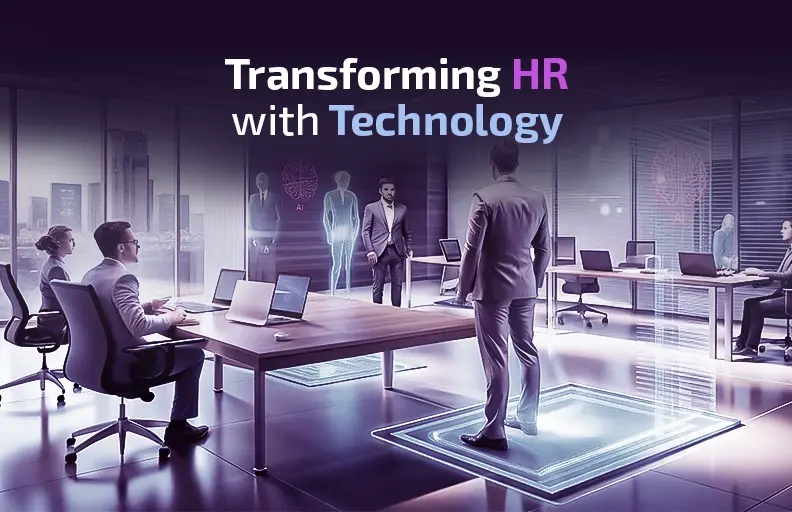
In today’s fast-moving business landscape, HR isn’t just about hiring and payroll any more. The role of HR is evolving into a strategic partner that drives culture, engagement, and business growth. At the heart of this transformation are modern HR software solutions that empower companies to manage their workforce smarter, faster and with greater insight.
In this blog we’ll explore how the best HR software (or best HRMS) are shaping the future of workforce management — and how Fovestta is positioned to help organisations stay ahead.
Why HR Software Solutions Matter Now More Than Ever
- Changing workforce dynamics — Hybrid work, remote teams, gig workers, flexible contracts: managing this complexity requires tools built for flexibility.
- Data-driven decisions — HR must now provide insights on retention, performance, skills gaps, etc. Modern HRMS platforms help surface those metrics.
- Automation of routine tasks — Leave management, attendance tracking, payroll processing: when automated, HR teams can focus on strategy rather than admin.
- Employee experience matters — With talent in demand, companies must deliver an engaging, seamless experience: from onboarding to feedback loops.
- Compliance & global scalability — As companies grow across regions, HR software must support multiple local regulations and data security standards.
Key Trends Shaping the Future of HR Software
Here are some of the major trends we’re seeing in HR software (HRMS) and workforce management:
AI & Analytics
HR software is increasingly incorporating predictive analytics: forecasting attrition, identifying skill gaps, measuring workforce risk. For example, analytics platforms enable deeper insights into overtime, absences, turnover.
Employee Self-Service & Mobile First
Employees expect apps where they can request leave, check payslips, update profiles on their phones. This not only improves experience but also reduces HR workload.
Hybrid & Remote Work Support
Tracking attendance, productivity, collaboration in hybrid teams needs tools that go beyond physical punches — geo-tracking, mobile check-ins, remote workflows.
Workforce Planning & Skills Management
Future HR software will help organisations not only manage ‘what is’ but also ‘what will be’: what skills will we need, how do we plan for retirements, how to map internal mobility.
Seamless Integration & Ecosystem Approach
A best HRMS doesn’t sit in isolation. It connects with payroll, finance, learning management, performance, and even external tools. Integration is key.
What ‘Best HR Software’ Means in Practice
When an organisation is shopping for the best HRMS or HR software solution, what should they look out for? Here are some must-haves:
- Unified platform: One system covering attendance, leave, payroll, performance, learning.
- Scalability: Ability to serve small teams today and grow with you tomorrow.
- User experience: Intuitive interface for HR, managers and employees alike.
- Analytics & dashboards: Real-time insights to support decision-making.
- Flexibility & customisation: Custom workflows, rules, approval hierarchies.
- Mobile access & self-service: On-the-go accessibility.
- Compliance & security: Local labour laws, data protection, audit readiness.
- Integration capabilities: With other business systems and third-party tools.
- Change management & adoption support: Helpful implementation and training.
These criteria help differentiate simply “an HR system” from the best HR software solution.
How Fovestta Is Leading the Way
Now let’s bring in your product — Fovestta. Here’s how Fovestta aligns with the future of HR and checks the boxes for best-in-class HR software.
Key strengths of Fovestta
- Seamless employee lifecycle management: From recruitment and onboarding to performance and exit.
- Strong focus on analytics & workforce insights, enabling HR leaders to predict and act rather than react.
- Mobile-first and self-service-enabled design, empowering employees and freeing HR from repetitive tasks.
- Modular architecture and integration readiness: Fovestta plugs into existing systems and evolves with your organisation.
- Compliance-ready and suited for diverse organisational sizes and structures.
Use-case examples
- Imagine your remote field teams logging attendance via mobile device, with geo-tracking enabled, and payroll running automatically based on actual check-ins.
- Or your HR leadership dashboard showing attrition risk mapped by skill-set, enabling proactive retention strategies.
- Or onboarding becoming a smooth digital experience: new hire completes forms, accesses learning, aligns with goals from day one.
By embracing these capabilities, Fovestta helps organisations move from reactive HR to strategic workforce management.
Business Benefits of Adopting Modern HR Software
Here are the tangible benefits that organisations can realise when they adopt a robust HR software solution like Fovestta:
- Reduced administrative burden: Less manual tasks, fewer spreadsheets, fewer errors.
- Improved productivity: HR teams can focus on higher-value initiatives (culture, talent development) rather than operational firefighting.
- Better workforce analytics: Data becomes a strategic asset — enabling data-led decisions about hiring, training, retention.
- Enhanced employee engagement: Mobile access, self-service, transparent processes lead to better employee experience and retention.
- Scalable operations: As organisations grow (geographically, structurally), HR systems scale without breakdowns.
- Compliance peace of mind: Automated workflows ensure consistent application of policies and better audit readiness.
- Competitive advantage: When your workforce is agile, well-managed and data-informed, you have an edge in fast-changing markets.
Implementation Considerations & Best Practices
Adopting HR software is not just about purchasing a tool — it’s about change. Here are some best practices:
- Define your objectives early: What are you trying to solve? Better attendance tracking? Faster hiring? Reduced attrition?
- Clean data before migration: Ensure your existing HR data is accurate and ready for transfer.
- Stakeholder engagement: HR, IT, Finance, managers and employees all need to buy in.
- Phased rollout: Start with core modules, then expand. This reduces risk and builds momentum.
- Training and change management: Users will embrace the system only if they understand how it benefits them.
- Monitor & iterate: Use analytics to track usage, value-realisation and refine processes.
- Evaluate ROI: Metrics like time saved, error reduction, turnover reduction help build the case.
Conclusion
The future of HR is no longer “just” HR — it’s about workforce management, strategic planning and empowering people. The right HR software solution becomes the backbone of this transformation. Organisations that embrace modern HRMS tools position themselves to attract, engage and retain talent in a world where change is the only constant.
With platforms like Fovestta, companies can shift from managing HR processes to orchestrating workforce success. The best HR software isn’t just an administrative tool — it’s a strategic enabler.
Ready to transform your workforce management? Discover how Fovestta can help your organisation unleash the power of HR software solutions. Book a demo today and take the first step toward future-ready HR.
